
 Español
 Pусский
 Deutsch
 日本語
日本語 한국어
한국어 हिन्दी
 Indonesia
 Melayu
 Tiếng Việt
Microchannel photochemical reactor
A microchannel photochemical reactor is a compact reaction system that combines microfluidic engineering with photochemistry to improve the efficiency, safety, and controllability of light-driven chemical transformations. It is designed with small-diameter channels, typically ranging from micrometers to a few millimeters, through which reactants flow continuously while being exposed to a light source. Because of the small channel dimensions, the reactor offers a very high surface-area-to-volume ratio, which greatly enhances heat transfer, mass transfer, and light penetration. These characteristics make it especially suitable for reactions that require precise control of irradiation and mixing.In a traditional batch photochemical reactor, light often penetrates unevenly through the reaction medium, and scaling up can be difficult because the reaction volume increases while the efficiency of irradiation decreases. By contrast, a microchannel photochemical reactor addresses these limitations through continuous flow operation. The reactant mixture moves through narrow channels, allowing all portions of the fluid to receive more uniform exposure to photons. This uniformity can reduce side reactions, improve product selectivity, and increase overall yield. Since the residence time can be accurately controlled by adjusting the flow rate, the reactor provides a high degree of flexibility for process optimization.Another major advantage of this reactor type is safety. Many photochemical reactions involve energetic intermediates, reactive radicals, or hazardous reagents. In a microchannel system, only a small amount of material is present in the reactor at any time, which lowers the risk associated with exothermic reactions or decomposition events. The small volume also enables better temperature control, helping to prevent overheating and unwanted thermal side reactions. These features make microchannel photochemical reactors attractive for laboratory research as well as industrial production.The design of a microchannel photochemical reactor usually includes a transparent or semi-transparent channel material, such as glass, quartz, or certain polymers, to allow efficient light transmission. The reactor may be irradiated by LEDs, lasers, or other light sources selected according to the absorption properties of the reactants or photocatalyst. In some cases, internal structures, serpentine channels, or parallel channel arrays are used to increase the interaction time between light and the reaction mixture. Advanced designs may also integrate cooling systems, sensors, and automated controls to monitor pressure, temperature, and flow conditions in real time.Microchannel photochemical reactors are widely used in organic synthesis, environmental treatment, and fine chemical production. They are useful for processes such as photooxidation, photoreduction, photocatalytic transformations, and radical-mediated coupling reactions. Their ability to enhance reaction efficiency while reducing energy consumption and reagent waste also aligns with the principles of green chemistry.Overall, the microchannel photochemical reactor represents an important innovation in modern chemical engineering. By combining continuous flow technology with controlled light irradiation, it offers a powerful platform for performing photochemical reactions with greater precision, safety, and scalability.
Products
Category:
-
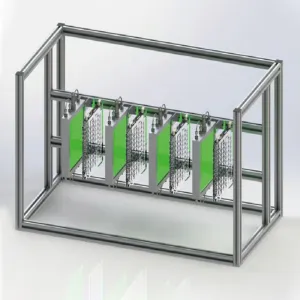
Microchannel photochemical reactor
Category: Microfluidic Photochemical ReactorsBrowse number: 1041Number:Release time: 2026-07-10 09:48:18Microchannel photochemical reactors integrate microreaction technology with photochemistry, serving as a platform that enables more efficient,precise and safe utilization of lightenergy for chemical reactions.Compared with traditional batch tankreactors,they achieve substantial improvements in light energy utilization, mass and heat transfer, reaction rate and operational safety, making them core equipment for modern fine chemical engineering, pharmaceutical synthesis and new material preparation.
News
Category:
No search results found!
Case
Category:
No search results found!
Video
Category:
No search results found!
Download
Category:
No search results found!
Job
Category:
No search results found!
Featured Products
-
NEWS
Microchannel photochemical reactor
Learn more



 WhatsApp
 Phone
Phone